Faith for Exiles

 Apple Podcasts

 Spotify

 RSS Feed

 iHeartRadio

 Amazon Music
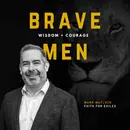
Mark Matlock is one of the most interesting men I’ve ever met. For decades, he has lived at the intersection of faith, culture, research, and the next generation. He doesn’t just study where culture has been—he pays attention to where it is moving. His groundbreaking work, including Faith for Exiles, has become a trusted sounding board for leaders across the spectrum of Christian ministry. Today on BraveMen, Mark brings that depth of insight into a powerful conversation about discipleship, culture, and what it means to build resilient faith in a rapidly changing world.
Mark serves as a Senior Fellow at Barna and was Executive Director of Urbana 2025 for InterVarsity Christian Fellowship. He is a strategist, researcher, and facilitator who helps leaders turn information into action. Mark understands something every leader must understand: data can tell you where the river is flowing—but wisdom tells you how to cross it.
He is also the founder of WisdomWorks, a consultancy helping churches and faith-based organizations uncover the wisdom already present in their people and turn it into innovation, clarity, and impact. His books include Digital Babylon, Faith for Exiles, and Faith for the Curious. This conversation is thoughtful, challenging, practical, and deeply hopeful.
BraveMen is hosted by Paul Louis Cole, president of Christian Men’s Network. CMN is a global movement of men discipling men, serving on the ground in more than 100 nations. We believe strong men build strong families, strong churches, and strong communities. We are men on a mission—and that mission is Jesus. For resources to disciple men and strengthen families, visit CMN.men.
Chapters
- 00:00:00 Introduction: Mark Matlock on Faith and Culture
- 00:02:22 Technology Has Outpaced Theology
- 00:06:38 Digital Babylon: Living as Exiles
- 00:11:11 The Discipleship Crisis in the Church
- 00:14:12 The Spirit of a Father: Discipleship Through Relationship
- 00:17:53 Creating Trust Through Challenge
- 00:19:53 The Power of Small Groups and Havruta
- 00:24:23 Urbana and the Global Missions Movement
- 00:29:12 From Everyone to Everywhere: Modern Missions
- 00:35:42 Faith for the Curious: The 64 Percent
- 00:36:55 The Image of God in Broken Pieces
- 00:38:43 Christians Need to Experience More Too
- 00:44:02 The Best and Worst Time to Be Alive
- 00:51:33 Revival-Minded America: 80 Million Strong
- 00:53:43 Talking to Strangers: Opening Spiritual Conversations
- 01:06:13 Dunbar's Number and Your Mission Field
- 01:08:53 The Age of Amplification: Learning to Listen
- 01:09:50 Closing: Technology Serves the Gospel
0:06 The Brave Men with Paul Lewis Cole. Hi I'm Paul Lewis Cole and this is the Brave Men Podcast. Fired up that you're here with us because one of the most interesting men that's a friend of mine is... Mark Matlock. And Mark is here today. This guy's the executive director for Urbana with InterVarsity. He's a fellow with Barna Research. With David Kinnaman, he wrote the book Faith for Exiles, which is how I first saw his name, and then we became friends after I read that.
0:47 But one of my favorite things about Mark is he was the executive director for Youth Specialties for years. And that's Mike Acquinelli and all those guys that just turned the world upside down. So Mark is one of these men who's been in the forefront, in the middle of, around the edges of cultural change and shift. over the last decades and it is a great conversation. One of the things that Mark and I agree on is that if we disciple men, we change everything. If we disciple fathers, we change the future. And so that's what Christian Men's Network is committed to, and that is the sponsor of Brave Men. Go to cmn.men, cmn.men.
1:30 Tools and resources to disciple men, for churches to grow, to help disciple your son and daughter, and also majoringinmen.com is a resource if you're a pastor or leader, to go through a whole series of our, how we launch a ministry, men, how we sustain it, how you make it grow. But today, Brave Men, it's about encouraging us. Really, it's about, for me, it's about engaging my heart and then equipping my hands and empowering my feet. Just making stuff happen. but it comes out of a deep place of our heart, not a panic in our hands or some sort of exterior thing.
2:13 And that's really what Mark leads us into. It's a powerful conversation. Thanks for being here today. Here's Mark Matlock on Brave Men. You know, one of the things that really attracted me to you before I ever met you was the book you wrote, Faith for Exiles, which I had a hard copy of. And now I'm sitting with the famous author. Yeah, I wish I would've brought a copy with me. I usually carry one in my backpack, but they're so heavy. Yeah, they're so heavy. And, but you made a statement in that, that our, and that book was written a few years ago, but it all, I think it's evergreen. Really speaks clearly. It says, technology has outpaced theology.
2:57 Yeah. And what do you mean by that? I mean, what was the, where were you headed on that whole? Yeah. Well, it was really the idea that technology outpaced our ability to disciple and that screens disciple. David and I wrote those two words on a post-it note and were probably silent in the room together for 45 minutes when we saw those screens disciple. Because the church had kind of... I think reached a point where they were thinking, hey, technology is not really affecting us, the Internet age. People want to be in person, and we're not really seeing the impact of it. But what they weren't realizing is that where people would normally come to a pastor or a leader, a spiritual leader, a small group leader, whatever it is, to get advice or help, they're now going to the internet first.
3:46 And so they're going and getting information from directly rather than having somebody help process that with them. And I think that was kind of what we were getting at is this idea that... we are being connected to faster than we're able to figure out what's appropriate. Yeah. And what are the rules? What are those card rails? You talked in that book about complexities. And, you know, so it's high-tech, low-touch. Exactly. And at the same time, one of the things, because... And we couldn't even see AI coming. Right. Right now, like 75% of people say they trust AI as much as they trust a pastor.
4:27 You can't trust the AI. That's huge, right? In fact, even on every AI machine there is, right? Whether it's Grok or Chad or Claude or whatever. Yeah. All of them at the bottom say this is not supposed to be a final source of facts, factual information. In fact, I'm at the baseball game last night with my daughter. And we're at the Rangers game. And I'm like, how many guys are still here from the World Series team that the Rangers had? We were both like, yeah, because none of the guys who were in the field, and of course, it was a Tuesday night game. So, you know, some guys were sitting down. There was one guy on an injured reserve or IL, whatever it's called in baseball.
5:11 And so I look it up, and it wasn't accurate. It was like, I'm like, ah, you know, because AI jumped in front of the search engine that I was using. He goes, here's the AI answer. At the bottom, it says, may not always be accurate. And it wasn't. And we look at her and she goes, well, he's not still here. I go, you're right. So now what do we do with that? Well, you know, once again, people are turning to it. for, to help solve their deepest problems. I was talking to a widow the other day who actually has created a virtual version of her husband and she has interaction with him, has loaded in information about things.
5:57 Yeah. And she's not a technical person, right? Like she's not like, you know, she's just an average person who's found that she could get this comfort in her life. Mm hmm. And, um, and so it is a, it is an interesting thing. And what's interesting is pastors have been more resistant toward AI, um, and congregants are leaning into it. And Christians, practicing Christians, our research at Barna shows, are actually leaning into it even with greater gusto by a couple percentage points compared to the general public. So it's important that we're paying attention. Yeah, so in Faith for Exiles, basically the subtitle was Five Ways a New Generation is Following Jesus in Digital Babylon.
6:39 Yeah, and you had that, you created that phrase. We created that phrase, digital Babylon, yes. So digital Babylon, which is a great picture. And yet, okay, so and then came COVID, because you wrote it just as COVID was happening. It came out maybe six months before the lockdowns, yeah. So digital Babylon, great sales were doing really well. And then unless you were using it for toilet paper, nobody was buying it. Yeah. But then it came, started coming back up again. Yeah. Well, you know what? We needed toilet paper in those days. We did. We did. Like six weeks. We did. There was a shortage. So crazy, the whole thing.
7:19 And of course, then we find out the truth, which is fascinating to me and fascinating to you. You're a researcher. You're a writer. You've written how many books? Probably a dozen now? Over 20. 20 books. Okay, over 20. Mostly for teenagers. No, but it's for youth. And you were the head of youth specialties, which has had this great, amazing impact. on probably the generation after me, but on my generation also. Incredible impact, you know? Who was that? Iaconelli and... Wayne Rice. Wayne Rice. Chick Long. Yeah, and then the guy in Sacramento at Bayside, you know, pastor in Bayside Church.
8:04 I know who you're talking about. Oh, my goodness. Yeah, you know, we're doing this live. I know. We're not going to edit this. I know. So... Well, Denny Rideberg, too, with Young Life, he was one of the original YS guys. Yeah, so the youth specialties just had this amazing impact in terms of understanding what people are thinking, right? So that's what you've been in the middle of your whole life. Right now, media, you're the executive director of Urbana, right? Which is every three years. Every three, a triennial, been going on since 1946. Since 1946 with InterVarsity. Are they the parent thing of that? They're the steward of it, I should say.
8:45 Steward of it, yeah. Yeah, trustee. And so you've got this background. So you study these things, and a lot of it, you study the next generation a lot. Now Digital Babylon, to me, in fact, I opened it up before you got here because I was thinking about that same phrase. Because prophet Jeremiah, Jeremiah 29, 11 says, You know, God says, the thoughts I have for you, not for your destruction. But if you go prior to that, the reason he said that is because prior to that, he says, in verse seven, he says, hey, where you're at, you need to plant yourself. And he's talking to exiles, which is what you were writing to. Yes. He says, plant yourself.
9:25 And then my favorite verse in that, Paper Bible, by the way. It says, work for the peace and prosperity of the city where I sent you. Pray to the Lord for its welfare will determine your welfare. Yeah. And I've been involved in a lot of work with city movements around the country as well and the globe actually. And yeah, that's been a big part of my work as well. So and that verse is really powerful. Yeah, that verse is huge because if we're not careful, we silo ourselves away from culture. We silo ourselves away from culture and we also confuse our national identity with our heavenly identity.
10:11 And kind of one of the cases that I made in Faith for Exiles and then continued with a little more depth in my book, Faith for the Curious, which was a project that followed it, was this idea that... that this idea of exileship is actually embedded into New Testament Christianity. For Israel, it was positional and seasonal, depending on what was happening in Israel's program. But for the Christian, when we are regenerated, we are grafted into a new family, our citizenship changes, we are now ambassadors. We're told to be aliens and strangers in the world. And that's a real transformation of an identity shift.
10:54 And so helping Christians understand that identity shift and the role that that plays to the place that they're at. So that was where for us, we were really seeing a lot of parallels in discipleship and kind of the discipleship crisis we're seeing in the United States right now. So what is that crisis? What's the discipleship crisis? Because everywhere I turn, of course, in my framework, that's what we deal with is discipling men. Yeah. What's the crisis? Well, I think most- If everybody's talking about it, why is there a- Yeah, I think most pastors, when we survey them and ask them to score their church, like let's just say we just ask pastors, Hannah, give yourself a letter grade for how your church is doing with discipleship, most would give themselves a C. Wow.
11:41 And and probably that means it's a D plus, right, because they are optimistic, but they're also pretty honest. You know, obviously they're pastors. I hope they are. And that. And most pastors, what they love doing the most is they love preaching. And the thing that's in every mission statement of churches and denominations is that we are about making disciples. So it's interesting not making sermons. So I think we as a church have, because discipleship is so personal and one-on-one intensive, we've kind of opted for these mass communication methodologies to try to deal with the capacity problem.
12:29 And so when Jesus tells his disciples, hey, pray to the Lord of the harvest, in the book of John, that he'll send more labors into the field, it's a capacity issue. It wasn't a strategy issue. It wasn't a content issue. It was just, we need more labors in the field. discipleship's a lot slower. And Pete Scazzaro, I did a project with him. We were contextualizing emotional, healthy spirituality for teenagers. And he made me spend a year just going through the material to the point that I could teach it before he even let me start working on the actual youth project. Wow. And at the time, I'll be honest, I thought, I don't need this, I've read the book, I've been doing spiritual discipline formation work for a long time.
13:16 But after going through it, I was like, he's absolutely right, I was a changed person at the end of that in a way that I hadn't, just by reading the book or by having read about spiritual formation in the past. Going through that in community with other people really shaped me. I think that's the key then, isn't it? Yeah. And youth pastors didn't want to do it. Like we were trying to do these pilots and a lot of youth pastors, they were already on to another church or out of ministry by the time we finished the program with them. And so it was like, how do we actually make a disciple? You know, I was with a group of youth pastors and I said, how many of you felt like you were discipled? Only about half the room raised their hands. And I said, how many of you can tell me who like discipled you?
13:59 And I'd say another 46% of the hands went down. These are the leading youth pastors in the country. So if we haven't been shaped ourselves and discipled ourselves, it's really hard to replicate that. All right, so my framework is the spirit of a father. Right. To be fathered. Yeah. And most men don't know how to father because they were never a father. Correct. So what you have in the church is you have pastors who were taught how to preach sermons, not how to disciple men. Yeah. Right. Yeah. And so what we've done is raise people with a what they lean into. In other words, we've created a DNA in which the metric is listening to a sermon versus studying the word.
14:45 Yeah. And then the study of the word thing is like, what are you guys doing? We're doing a Bible study. Oh, yeah. It's like, you know, it's like Jamal's group or Bobby Joe's group or something. And it's boring. It's like, oh, man. Well, and Jesus did not take his disciples on... a boring journey, right? It was filled with adventure and- And dangerous. And frightening at times. And I think that's what's missing on our discipleship model. And it's been interesting as I tried to help churches implement faith for exiles, right? So one of the beautiful things about the timing of it going into the pandemic is all of a sudden, the world locks down. we have all these copies of the book that have been out in, in circulation.
15:28 A lot of, uh, college, college and seminaries were using the book as a textbook. I started getting calls. Would you sit down with our seminary class that we're reading your book? So I spent a lot of time on zoom, actually interacting with readers that were practitioners. And it was just a remarkable experience. And I, um, I, So I learned some really interesting things. And one of the things I realized is that most people, discipleship is read your Bible, pray, go to church regularly, share your faith, and if you have an income, tithe, right? And it's that wagon wheel model. The thing is none of those things in and of themselves really produce what Jesus was going after with his disciples, which was he wanted them to trust him.
16:15 And even to the last, minutes of his time on earth, that was still up for question, right? Until they received the Holy Spirit. And there was still, Peter was still really fragile in the garden. And so one of the things that's missing, I think in our discipleship is this idea of what our goal is. It's not to just have people believe things. It's not just to get them to do new habits, but it's for them to really lean on stop leaning on their own understanding, as Proverbs 3, 5, 6 tells, and to lean into Jesus. So literally for me, what I'm trying to do as a discipler is I want to take the disciplee and I want them to stop standing on their own two feet and lean, put all their weight onto Jesus.
17:04 And I literally feel this in my own life when I'm working through something, I'm panicked, I go, wait a minute, I can feel the strength of my feet. I'm standing in my own strength. I need to lean into Jesus and trust him. And I think we're not doing that in the discipleship process. We're either imparting content and knowledge or we're developing habits. But are you trusting God with your life? Sometimes that happens through reading the Bible and doing all of these different things, but I don't always know that it's because we're intending to help them see that and be able to do that. So you're not discounting reading the word?
17:44 Of course not. No, no, no, no. So, but when you're talking about leaning in and trusting him, how does that, how's that worked out in a daily life? So like Jesus, one, Jesus, like he took his disciples into a boat and then the storm happens, right? The storm happened because Jesus made the storm happen. He put them in a situation. It was the storm. Yeah. He put them in a challenging situation so that they would realize the edges of their trust and then realize they could trust him. And I think the reason that service projects, evangelism, mission trips are so powerful in the lives of believers is because they are forced to get off of their own understanding and trust.
18:30 But those are really extreme situations. How do we make this more of a normal part of growth? How do we actually create challenging activities? And a lot of that is you have to know a person. You have to know their life so you can see it. Yeah. So now you're talking about scale. And it doesn't. Yeah. And it does discipleship is context sensitive. Yeah. And because of that, it doesn't, it doesn't scale. The best we can do is write a book and that might do some things we can, we can speak and give some speeches, but it really comes down to intimacy with a person who's a little bit further down the road than you. And sometimes even maybe in the same boat as you, uh, you can learn a lot together if the goal is to try and figure it out and you know, you have good source material.
19:14 Yeah, Pastor Eddie Leo in Indonesia, who's on our board for Christian Men's Network, he developed when he and the young men in his college that became followers of Christ and just radicalized in it. out of their background there in Indonesia, they developed something called Havruta, which is a Greek word which means fruit. And so what's fruit? Fruit is a couple people. So they developed this thing, one another lifestyle, where it's just groups of two or three. So all they did was empower groups of two or three to get together on a regular basis. You know, a lady gets together with two other ladies once a week, and they didn't have a program.
19:56 They couldn't do all of that. They just said, begin to discuss the Word of God. Begin to talk about the sins and pray for each other. Spend 45 minutes or an hour together. Well, they ended up with 250,000 people doing that, you know, which then built this large church called I Beloved. And so to me, the scale is when a person is discipled to the point that they're willing to be active, pull somebody else in, have a bite to eat, cup of coffee, talk about it. And I think, you know, the Western culture is we hire people to do that. Yeah. Yeah. Yeah. We hired a guy to do that. Yeah.
20:36 Well, you know, it's interesting, Paul, if you asked me like, what, what do you consider some of the most successful things? You know, I've run comp bit, large conferences and written lots of books. I never think of those things. I always think about time in my living room with a couple that's marriage is falling apart and now is stronger than it's ever been. I think about a young man or a young woman who is hanging by a thread in their faith and were able to intervene and help them. Those are the fruit moments, right? That's where you actually see the fruit. I don't know that a book is fruit. When I'm in heaven, my book's Jesus is going to be like, Hey, I read your book.
21:18 It's really good. You know what I mean? He's not going to be like, Yeah, this is great stuff. You opened my eyes, right? There's not going to be that. I never saw that before. But whoa, look at all these people that are here. I might say, it's enduring. You didn't expect this. That was unexpected. Where'd that come from? It wasn't me. Yeah, yeah. There might be more embarrassment, like, oh, I got that way wrong, you know? Yeah, but at the same time, isn't that part of, I mean, writing a book, doing a video, writing a new song, getting up in front of some people, gathering a group of people at a home group, isn't that all part of pushing things down, expanding the kingdom?
22:04 You know what I'm saying? Everybody has a lane. If we do what we're supposed to do, like you're extremely gifted as a writer, you're a coordinator of cultural things, you know, you're a provocateur, you get people thinking about stuff. You're those things, that's your lane. Now somebody else's lane is they coach little league baseball. Yeah. And they're really good at it. And they impact young men's lives. It seems to me that if we all do that, in largest things, right? Yeah. So nothing wrong with writing a book, writing a song, anything like that. That's sending that labor into the field. You know? It's what's my field.
22:44 You know, what is the field that God's called me to be in? And, but I think if you ask most authors and big speakers and stuff like that, you know, about the moments, it's usually going to come down to people. that they invest in. They consider the high points where they really help somebody. Yeah, it's that thing about on your deathbed, let's say. You're not thinking about, hey, man, I had some great rims on that 58 Chevy. Yeah, yeah. It's going to be, I remember that time we went fishing. It's going to be moments, right, with others? I think so. I think so. It's really fascinating because I was in my daily reading this morning with a John, of course, one of my favorite stories, Raising Lazarus, and John 11.
23:31 And then I just hadn't, I underlined it for the first time. It was like, I'd never underlined this before. And it said that they all got up in arms, you know, I can't do this. He can't raise guys from the dead. We're going to have to kill them, you know. And it says that Jesus, because of the danger, took his disciples and they took off to Ephraim. Now there's, I don't know what the gap is, you know, another couple months before we actually see something. But he didn't stick around, like keep poking it. He's like, you know what? There's a lot going on here. Let's go this. And those gaps is where he discipled. It was in a sense, we hear some of the stories, right?
24:13 But some of this discipleship happens in the unseen places. Right? I think so. Yeah. Just helping somebody with something. Now, big events, you're the head of Urbana, which is this, if people haven't heard of it, you had a big event in Phoenix. You got another one coming up in three years. Yeah, 2028. Yeah, 2028. Yeah. And where's that? We don't know yet. Oh, okay. I'm actually working on that. Yeah. I've been on planes the last few days looking at cities. Yeah. So then, because if people don't realize, your convention planning has to be a couple years out. Yeah. Right? Everybody's kind of geared into it because of their connection with InterVarsity and Urbana and so forth.
24:54 Yeah, Billy Graham. I mean, Billy Graham spoke at more Urbanas than anybody. Really? And he basically said that 55% of North American missionaries came, received their call at Urbana. Yeah. And somebody did some... graduate paper to see if that was test that actually true if it was true and it turned out to be true so it's been a significant force in the missions movement where we're at in the world today with globalism with gen z being a hyper connected generation um you know the world's changing and and how we live into the great commission is changing what used to be kind of the west to the rest is now kind of from everyone to everywhere and so it's a really understand how to help a young generation live into God's global purpose for their life in the midst of all this incredible change.
25:50 So Urbana, you had 28,000 people, something like that? Young people? No, it was only 7. 7,000 young people? Okay, I was reading a stat where it must have been a cumulative stat of how many you'd have over the last number. Well, there were times, you know, it used to be it was the only college event out there. Now we've got lots of other great events for colleges. Yeah, yeah. So you had 7,000. This is pretty amazing. 7,000. basically 18 to 25? That's roughly, that's a sweet spot, yeah. Okay, and so you got 7,000 in a room. So you're building these big events. And they've come to learn about how they can be missions. This isn't like, there's no real headliner, bands, or anybody like that.
26:32 You're doing a big thing, you know, in order to do the small things. Yeah, I always say that Urbana is a big event, but it's an intimate experience. Because when I interviewed people, when I first came into the role, and I went to Urbana 35 years ago myself in 1990. And what I realized for people is that it was a pilgrimage-like experience. It was a moment that they kind of said, ooh, I kind of found my place. my place in the world, right? It was a direction setting. It confirmed something or something shifted or it opened their eyes to an opportunity. It kind of is that.
27:13 And it's not just an emotional experience. It's a, all of a sudden I realize, hey, I'm gonna be doing my job in a different way. I mean, I was talking, I was in Kenya just a few weeks ago and there was a girl from, I'm actually meeting with Tamara online, who's from Montana. And she came into Urbana and says, she just got her degree in geospatial information systems. And she was like, Lord, I wish there was a way you could use my passion. for geospatial information systems for your glory, right? And at Urbana, she realized that there are these incredible mapping projects that are going on to try and figure out where we need churches and where there isn't.
27:57 Oh, wow. You know, where there's a deficiency of churches for the number of people and things like that. And so she's pursuing that. So we're gonna talk about tomorrow is connecting her with some of the groups. That's fantastic. Yeah, and so Urbana kind of has that kind of a thing where people come in and God connects them with opportunities. Yeah, so it's not, this is really fascinating to me, and I've got a couple other questions. Ray Johnston, by the way, just popped into my brain. Yeah, that's right. Yeah, from Bayside. Yes. Thank you. Yeah. It's like, hang on. I was saying there because he spoke at You Specialties for me for compassion. And I'm like going, I was standing right next to him. His name's in my contacts.
28:39 He's such a good man. I love that guy. And what a visionary leader Ray is. But so... So now somebody comes to Urbana and what they find out is they don't necessarily, because when I was growing up, if you were going to commit to like sharing your faith, you had to go do it in a sense professionally. Yeah. You had to go, you know, like the guys who do live dead, you know, and some of those amazing groups, you had to go all in or you just go be a welder. Yeah, I mean, missionaries used to pack their belongings in a coffin so that they had something to ship their body home or bury it in, and they went. Yeah, I mean, it was kind of a one-way trip, and now people are fluidly moving around the world.
29:25 But we're also understanding that if I'm a welder, In that world in which I live, I am that guy. Correct. I am that missions person. Correct. Right? That I don't have to, in order to be a productive follower of Christ, increasing the kingdom of heaven, having a life that's significant, I don't have to sign up to be this guy or that guy on a stage. I just have a sense that. And I think that's that. This thing's coming a little bit of a, I keep hitting this, but that's the field and the workers going into the field, right? Where's my field? If I'm being called to a field, what is my field?
30:07 What is the field space around me? I'm only gonna harvest what's around me to harvest. And what we have now are, and that's my field. And that's what I need. We need more labors in the field so that they have more surface area that they can cover in there with the amount of time that they have, right? We're covering surface area. Yeah, yeah. So it's like, yeah, we need more welders. Yes, we need more welders. We need more technology. We need more, like there are incredible movements of women that are going in housekeeping in other countries. We need followers of Christ in all those places. Yes, 100%. Be salt and light. I'll tell you what we need is about 600,000 followers of Christ who become youth coaches in little leagues and things like that across America, North America, and the States because coaches really impact young people.
30:54 Yeah, reading buddies, anything. One of the things I think that happens is we've become really good at, if you will, discipling a man or mentoring a man into his life platform of ministry rather than mentoring him into being effective at the kitchen table. Right. Right. It's like, but that's where we want him to be effective. Right? Again, because Christian Men's Network, Fathers, this is what we do. Well, if you're a believer, just starting with your own children is powerful. There you go, change the world, the future of the world.
31:35 There are parents that aren't at a place in their discipleship where they can really be effective there, and so they should lean into the network and the community of the church. Of course. To help. Well, you've written, that's why you've written some amazing books for young people. Yeah, and parents. Yeah, and their parents. You know, what was the one book you wrote about parents? How not how? Real world parents or. I was thinking of the one. It was how to love your parents or something like that. What was it? Oh, yeah. Wisdom on getting along with your parents. Yes. Wisdom. I had a whole series called Wisdom on. Yeah. A series on Wisdom on. That's what I'm thinking of. Yeah. Wisdom on getting along with your parents. Yeah. And they translated that one into Spanish.
32:16 And the translation was Lord, save me from my parents. That was the translation. Maybe they hit it better. Yeah. Yeah. I liked it better. It was a better title. So, David Kinnaman, Barna Urbana, you're working with that. You've got a position now also. You're working, something just began... Yeah, with the Hendrick Center, Dallas Theological Seminary. Yeah, BTS. So Daryl Bach has always been a huge influence on me, and he and I were talking about just, you know, boy, I'd really like to work closer with you and all that, and he said, you know, we should offer you a fellowship at the Hendrick Center. Yeah. So I just begun that.
32:57 I don't even really know all that's involved there yet, but I'm working on forming a project that I'll do with them. Oh, that's fantastic. It'll be something around cultural engagement and giftedness. Yeah, that's fantastic. And then right now, media, all the different things you've been involved in. To many of us, we would drive along in our neighborhoods, particularly in Western hemisphere, and we'd see a church here, a church there. Seems to be churches everywhere. We seem to be in pretty good shape, and yet... We look at progressive socialism or the Communist Party's larger today than it was 10 years ago, whatever the little instigating factor might be.
33:39 And I'm wondering, churches don't seem to be growing in general. Is that right? Fairly flat. Fairly flat. And yet there seems to be a lot more talk about spirituality than... In Christian things. So how do you figure all that? Are we good? Are we not good? Are we in crisis? I think what's happening is that people are looking for more. And the He Gets Us ad for the Super Bowl this year was all about more. What is more? I want more. By the way, great group. Yeah, what they're, yeah, yeah.
34:20 I know they get critiqued for spending all this money on ads, but I'm like, I wish I had that kind of money to glorify God with, you know? Well, the thing is this, is that... You know, all of us need to do what we're supposed to do. That's right. So if what I'm doing is building a racing team and I'm drag racing, okay, and you're putting a lot of money into it and I got to rebuild the engines every time you do a run and all that kind of stuff and we're into that. And yet at the same time, I'm doing the chapel service on Sunday morning before the races and... You know, somebody could say, well, you should have spent that money. But at the same time, you know what? Most of the people who critique that stuff need to be going and doing something about it.
35:04 Well, that's correct. I mean, whether you eat, whether you drink, whatever you do, do it all to the glory of God. And what do you do to the glory of God? You make him known. And we need people to do that. And the great thing is, is I know some of the people behind those ads and they're all doing the other stuff too. So it's not like they're, they're a one trick pony. I mean, they are literally glorifying God in every aspect of their life. They're caring for the poor. They're doing a lot more than just doing Superbowl ads. God, that was a little sidebar. Yeah. But anyway, because I had to stay up for those guys. Yeah. But the point was by doing early, but we're talking about more. Yeah, but the point of more is simply people, I think there's a failure of secularism in our culture.
35:49 This is what I write about in Faith for the Curious, because we actually measured the spiritually curiosity of America. And Faith for the Curious just came out. Yeah, just a couple years, a year and a half ago. Four months ago. And basically what I was noticing in all the research that we were doing for all these different Christian organizations, there's this group of people that just don't look like what we all think of when we think of somebody who's unchurched. what is going on with this group of people? And so I wanted to try to tease that group out and figure out who they were. And so we call them the curious. And they make up about 64% of the unchurched population.
36:31 Which is huge, it's massive. Um, and really, yeah. And they are actively seeking spiritual means to improve their lives. And they've realized money isn't doing it. Education isn't doing it. And the way that I think about it is, you know, uh, uh, St. Augustine talked about us having a hole in our soul, right? A God shaped void. Um, we always think, well, what we need to do is put a big Jesus plug in that. But the way I like to think about it is that there's broken pieces inside of that void. There are little shards of mirror that reflected the glory of God, the image of God. And that little shard is reflecting something in every broken person.
37:14 And they're feeling like, I'm experiencing intimacy, but I want more creativity. I'm experiencing a sense of, you know, I want justice in this world, but boy, I'm not getting it through the means that I'm pursuing, right? They're feelings. I, you know, I'm loving being generous. I want to be more generous. They're, they're experiencing something of the image of God in that little broken piece of mirror. And it wants to fill that void and get bigger. And the only way that that happens is through Jesus Christ. Now here's, here's the crazy part, Paul. as I've been working, workshopping this with different churches, trying to help their congregants understand like what's going on here because people are trying to tarot cards.
37:56 They're turning to, uh, horoscopes, numerology, uh, meditation, mindfulness, all kinds of different spiritual practices, trying to get that more. You and I know that will never happen without Jesus. Right. So when I'm talking to a person that's outside the church, I'm listening. What is that thing, the image of God in them that wants to come out, that wants to get bigger? And now we have something in common because I want more of that too. Mm-hmm. And so now we have something to base a relationship on that isn't just about salvation, but it's about this pursuit of this thing that we both love or we both want more of in our lives.
38:39 And now I can help them see how Jesus fulfills that. But as I've been workshopping this with churches, what I found is most Christians aren't experiencing more either. They have believed that Jesus is Lord, but they've not experienced the benefit of Jesus as Lord. So they aren't experiencing more intimacy. They aren't experiencing more generosity. They aren't experiencing more creativity. And they're not getting the full benefit of grace and mercy in their lives and the restorative work of the Holy Spirit in their lives. So if we aren't experiencing it as believers...
39:21 How can we can't be winsome to the people around us? Right. Yeah. We don't have to be perfect, but but it's that we're chasing after this. And hopefully Jesus is making a difference. And so as I'm talking to these these people and they're like, well, I don't I don't know how to talk about how Jesus helps me be more creative or how Jesus makes me gives him helps me be more intimate because I'm not experiencing that in my own life. Well then, whoa, we have no good news to share. So if we're supposed to be good news people, right, we got to look at like where is the good news in my life, you know, and how is Jesus helping me experience that good news? Because, man, my life is filled with good news.
40:02 And I find that there are very few people, there are some that reject me on the base that I follow Jesus. But more people are more like, wow, I'm happy for you. Maybe not for me, but I'm glad for you. That's an interesting thing because it talks about it in Luke 21. I was looking it up. It talks about in the last days. And Romans also talks about in the last days that men will fall into fear because they have been subjected to frustration. Yeah. In other words, it's the narrowing of things. So we have AI and the complexities of life. And everybody says life's faster and more stuff happening quicker.
40:47 And everybody feels, you know, if you ask that person, are you busy? Oh man, I'm just wiped out. I am so busy. And then they'll go, on the other hand, they'll go, and then last Friday I binge watched, you know, an eight-part series. Yeah, some horrifically immoral show, yeah. So wait a minute, you started at 10 p.m., you went to 4 a.m. watching this thing, right? Filling your mind with this crap. And yet your life is just jammed. Well, no wonder you were tired the whole next day. You know, it is funny how all these things impinge on us, but I do think there is a subjection to frustration of the whole culture.
41:33 It says we groan, right? And if you will, what it says then is that the hope is that every knee will bow to unconfessed Christ. So this pushing together this compacting of our lives, is it a plan? Is it a strategy of God? So that we live in a sense of dissatisfaction that then looks for an answer? I mean, it could be. I mean, it could be the, you know, squeezing the toothpaste tube so the toothpaste comes out, you know, and then you got to deal with it.
42:13 You know, how do we figure out what to do with this? That could be the, that's an interesting frame on that. Yeah, subjected to frustration. So I look at it as kind of like when you're loading cattle, something. You start with a large thing and you just narrow it. Pretty soon they're all lined up, you know, the right direction. And the fact is, is that if we didn't have that, if there wasn't that tension, Would we look for a savior? Well, this goes back to our original thing about trust and discipleship, right? I think people are clinging to the wrong things. They're clinging to a political solution, and they were doing that in Jesus' day too, right? Yeah, it's... I mean...
42:55 It's like the divided nation. A lot of his disciples were looking for a political leader in Jesus, and Jesus goes, I got something better. People say, it's never been this bad. I hear this all the time. It's never been this bad. I don't know, man, the dark age is pretty bad. 25% of the world died bubonic plague. That was bad. Civil war was not good. Well, in my book, Real World Parents, we actually ask people, do you think the world right now that you're raising your kids in is the same, better or worse? than 20 years ago. And the overwhelming majority of people said worse. And then I gave data and just showed how, no, this is actually a great time to be alive as a person.
43:37 I mean, look at where we're sitting. Look at the opportunity. Look at this. We've got this studio that used to cost a million dollars to build. And we invested in the building $300,000. And then... you know, 100,000 of equipment and whatever, or a little less even, and yet we're doing what would have cost 10 million dollars years ago. I got an iPad. My grandkids, when they turn 13, get one of these little phones that, not a burner phone, but they're kind of compacted where they- Yeah, they're limited. They can only do certain things. Right. But they got a little thing in their hand. Get this little thing. I mean, that's only 15 years old. Yeah. Right?
44:17 I mean, YouTube's only what, 16 years old? Yeah. I mean, there's so much. I didn't even have a VCR when I was a kid. I'm old, but not that old, you know? You know what's funny is I had some cassette tapes I wanted to look at, and I couldn't find a VCR. I had to order a special order of VCR. Whenever you have media you can't use, call me. I have zip drives, I have a Betamax player. Betamax? They ended up selling notes in South America because they couldn't sell them in the US. So the fact is that this is the most awesome time in the world. My grandson just turned 13, my second grandson, second oldest, just turned 13 and his dad took him to a a surfing place in Waco, Texas.
45:07 And he learned to surf in Waco. How cool is that? You know what I'm saying? Yeah. I mean, the coolest time in history to be a kid, also the most dangerous. Also the most dangerous. Like John Tyson said, he said, it's as if a porn store built themselves next to your house, and then took a giant opening, you know, little funnel, funneled it into the inside of your house and just started dumping stuff into it. He says, that's the battle that we didn't face when I was a kid, you know? You had to go find somebody's bad uncle.
45:49 Yeah. Oh, no, there was a great article in, it was Esquire or GQ, it was, are you jealous of your 14-year-old sex life? Yeah. And it was talking about from a purely secular window, just like what that whole experience is like. And it was really kind of mind-blowing because, yeah, I mean... I'm really grateful that if my father ever looked at pornography, I don't believe he did, but I never found it. I never had access to it because it was an atomic. Right. You had to have atoms to be able to see it, and then you had to manage those atoms. So I never really even confronted any of that stuff until I was much older in life, when I had friends that had access to those types of things.
46:35 I guess it's a real blessing not to have that. Yet our children, you know, through not even like accidentally came across stuff on the internet, you know, not even intending to find things. It was, it was there in our home, you know, and, uh, and it, and it was, uh, you know, so those things are really more reason for us to be vigilant in our faith to express and explain why your identity, this is who you are. And that's the role of a father is identity, to help that young man identify, this is who I am, that's why we don't do this. That's why we're protected against that, that's why we do this stuff.
47:17 You know, it's the most awesome time in history to be alive and some of the most difficult. Yeah, I think everybody's a little overwhelmed. And that's why we have to be careful and really ground ourselves in the fact that we are citizens of the kingdom of heaven. That this is supposed to be chaos all around us. And when the monster hits in the superhero movie, the hero's going toward the monster. Everybody else is freaking out over the chaos. And it's that inner resolve of that of that hero that's able to see clearly to be able to defeat the thing that really is the problem and not the wrong problem.
48:01 And when Paul says, you know, whether, you know, whatever circumstances I've been in, I've learned to be content in all things. To me, that is not a like I'm just sitting in a chair on a porch or. you know, watching the day go by with a glass of lemonade in my hand. Right. He's basically saying I'm an inner peace so that what the external world does not define my interior world. I am content. And I think that as Christians, that's one of the best things that we can use as a litmus test. When I start, when I start feeling like I'm losing control, that tells me I'm not trusting in God. So that's my early warning system, that oh, I'm not trusting in the right place.
48:44 If I'm worried about what the competition's doing, then I'm not trusting in what God's doing. If I'm more comparing myself to the neighbor or this other family in our church, well, I'm not focused on what I'm supposed to be doing, because I have enough to do on my own then worry about what's going on in somebody else's home. And I always say don't judge your family by what you don't know about another person's family because we only see things through a certain window. Yeah. Yeah. And Facebook gives us the ability to do plastic surgery on our reputation, right? Like we give people the illusion that we're living something differently than we really are, you know. Yeah, there's some people that, yeah, it's like, yeah, it's pretty pictures.
49:27 And then there's the person who overshares. And you're like, yeah, I don't need that. I don't need to know all that. I don't need to like it. So the church is flat growth, but are we having significance? Let's just talk about the United States or North America, if you will. Yeah. Are we still having impact? Are we lost impact? Are we lost significance? So it's interesting. Excuse me, I didn't want to shortstop you there, but I see a lot of stuff. Maybe I'm just more observant. It's like when you buy a yellow car because you thought there were no yellow cars, and all of a sudden you see a bunch of yellow cars every time you turn around.
50:09 I just see a lot of things, whether it's Justin Bieber singing Hallelujah at the World Cup or whatever. I just see guys kneeling and praying. I see a lot of that. And yet if the church is flat, or we have an impact? I would say right now, like I said, because everybody, we have this large spiritually curious group, right? So people are open to spirituality and spiritually, not necessarily Christian things. but they're not opposed to Christian things as much as we think they are either. Right. So I found there are two types of spiritually curious. Some that carry a Christian wound from church or growing up where Christianity was implemented poorly, maybe pharisaically.
50:53 And then there are those that literally have no clue. So we have a post-Christian and a pre-Christian mind coexisting in our country. And that defines their posture toward their openness to spirituality right now. But what I'll say about, but we are seeing these pockets of revival that are breaking out on the college campuses. We're seeing some spiritual fervor there with young people right now. Gen Z and millennials are outpacing elders and boomers and Gen Xers and going to church. And they're going to church more frequently. Nobody's going to church with great frequency anymore. Like frequent going to church is 1.9 times a month. I saw your young men, you know, the young men was at Gen Z guys.
51:37 Yeah. It's two out of four Sundays or two out of four weekend experiences. A little bit more than the average. More than average. Yeah. And that's pretty remarkable. It is. It tells us something stirring, but it's also a moment that we have to steward well because we have to look at why are people doing this? Because once again, we cling to false idols when there's chaos in the world. We're looking for certainty rather than trusting in the one who allows us to be confident in the face of uncertainty. Because we have a certainty in where things are going. It's just the immediate moment that's chaotic.
52:18 And that's why that inner resolve, that contentment or inner peace is so important in this moment. Otherwise, we start clinging to politics. We start clinging to toxic masculinity. We're all in favor of biblical masculinity, but there's a toxic masculinity out there as well. that people cling to and go for trying to find some sense of identity. Well, we cling to all sorts of things for definition. Money. And what you allow to define you determines your destiny, and that's the issue for men. So this is a discipleship moment to help steward and shape. Now, men don't think in percentages. They can't really see them. Right. It's fascinating.
52:59 So what you're saying is six out of ten people that we encounter in our daily life are spiritually open, curious. Just I think it's fantastic. Tell me the name of the book again. Yeah, and the 40% that aren't, you got a bunch of them that are Christians. Yeah, it's very curious. Like almost 30% that are Christians. So it's a very small percentage that are actually hostile. Anti. Yeah. Yeah, it's only one out of 10. And so the opening lines with people that I typically have, I try to figure out what they are spiritual about. You know, and so it just so happens about just about a little bit over 50% of everybody believes that they will be accountable for how they live their lives when they die, whether they're Christian or not.
53:44 Okay. So if I sit down with somebody and goes, what do you think happens when we die? Whether it's God or Zeus or somebody. Yeah. Somebody's going to happen. Karma. Yeah, something's going to happen. Karma. Yeah. Karma. Karma. Karma. Karma. Karma. Karma. Karma. Karma. Karma. So I'll just sit down and go, what do you think happens when we die? And that can start a really interesting conversation. What do you do about that? You know what I mean? Hey, is there anybody in your life that you really admire their spirituality? Not Christianity or religion, but their spirituality. And they will almost always reference a relative. often a grandmother who was a believer. And then that opens up a door. Do you have any experience with the church or spirit? What was that experience like? Just start by asking questions. I'm finding that people are so starved to talk about spiritual things because there's always a party foul, right?
54:27 Aren't people starved to talk to people, though? Isn't that part of it? They're looking for people that are willing to talk to them. Yeah, and they don't know whether they're willing to talk to them. I think we all want to connect more with people. Everybody wants to say something. Yeah, we live in an age of amplification. But people, I find men love to talk about spiritual things and meaningful things. What's so funny is I have men's leaders and pastors and whatever say all the time, yeah, we just can't get our guys to get together. I go, yeah, because it's not attractive. But they'll all go down here to a bar or go to wherever their hobby is. Let's say, you know, whatever that may be. They race airplane models or something.
55:07 And these guys are talking BS like crazy. They're talking all day long. Here's the deal. Men talk. Way more than women sometimes. We're like some of the worst gossips out there, I think, you know. No, it's just, it's hilarious, man. I mean, you could, if you wanted to. Wherever you find yourself, you can turn and ask one of those questions. Yeah. You know? And I think spirit to spirit. I had this happen. I won't mention who it was, but it was somebody well-known. And I said to them something about the way they conducted themselves around me in some meetings that we were in.
55:48 I said, you're different around me. I just actually said that to him. He goes... Yeah, I don't know why that is. I go, I don't know. Probably because you had some sort of Christian upbringing or something in your life. And it kind of tunes in to the fact that I'm a follower of Christ. And the guy goes, well, hell yeah, that's probably it. And then we ended up in this conversation. Yeah. Yeah, it's really something. We had a guy come to our church. I'll tell you, Jim was last game. He's one of the world's leading authorities on upper body repair of injuries through therapy, physical therapy. So all kinds of awards, help the US Army and all this stuff with the frozen shoulders and all that stuff.
56:31 Anyway, so when he first came by the church, he was hoping that his wife and daughter hadn't joined a cult. He's like looking in like, what are they a part of? So as he left, he said to me, he says, man, I love the aura of this place. And I said, hey, I can actually teach you how to pull up that aura anytime you want and carry it with you wherever you are. He goes, he goes, no kidding. In different words. I go, yeah. He goes, well, I'd like to find out. And so we met for coffee. And then the second time we met, he goes, okay, so wait a minute. So this aura, what you're saying is Jesus, right?
57:14 I go, yeah. I said, man, I got to think about that. That's not how I ever framed Jesus. Right. And so about three months later, man, he prayed, became a follower of Christ. Got another friend who just through times of going to dinner as couples, over a long period of time, One day he went to church with his friend, lady, they were older couple, but they were, neither one of them married. And one day he says, yeah, I'm gonna get baptized next week. I'm like, really? I didn't even know you made a commitment of faith.
57:56 Yeah, did quietly. Just our being together. And I'd never been like hammering them. Yeah. And so then he sent us the photos. Yeah. I got baptized today at this church. It's funny. So I, I, that's been more my experience. So awesome. I have more people report their conversion to me than I am actually involved in the traditional praying with them or whatever. And I think that's so wonderful, you know? Um, and, uh, yeah, it's, it's, don't you think something has to move though? In other words. And by the way, our research is showing that like, we have a lot of our population right now, but 80 million Americans are what we call revival minded.
58:40 What does that mean? It means that they believe that spiritual change can happen and is coming. Now, whether it does or not, we don't know, and we weren't able to go in and define what do you think about, what do you think revival means? This is your work with Barna? With Barna, yeah. Okay. But it does say that people are hopeful and that people are expectant and that they believe spiritual change is possible. And so there's there is an energy in our country right now, if you look for it around all of this. But there's also some frames of just, you know, we're going to hell in a handbasket. You know, a is going to be the end of the world and sinfulness is everywhere and all this.
59:21 It's easy to say since, let me see, since 32 AD. Yeah. Well, and that's the thing is if we have this mentality that we are persecuting, we can raise a lot of money and fill a lot of seats by preaching that message. But the point of faith for the curious was to give some foundation for this idea that no, the world is actually much more open right now. I did some specific research in New York. We found that one out of every two, so 50% of all unchurched people say at one time in their life, they attended church on a regular basis. Wow. So that means if I sit down with somebody in New York who is a, you know, who's not in church, and I say, hey, do you have a spiritual backstory?
1:00:09 They probably do. And that gives us a great place to connect. Totally. This is Malcolm Gladwell had the book that just came out, Talking to Strangers. And his whole thing was, we're not good at it. And it sort of stacks on top of the book he wrote years ago called Blink. Yeah, good book. Thin slicing, how we frame people just immediately on a word, a thing they're wearing, a tattoo, or whatever. And all of a sudden we move it because we want some sort of, we like to have things positioned properly in our minds, right? Okay, we slot this person and slot. And he said, the problem is we really don't know people's backstories.
1:00:53 And then, but we make up one right there on the spot. Boom. Yeah, this guy's going to be that. This guy's going to be that. And if we really begin to ask these questions, this is really fascinating to me. What are some other leading questions that you? Well, you brought up tattoos. Tattoos almost always have a spiritual connection or a life moment connection. So when I see, first thing I do is I admire their tattoo. Wow, that is a cool tattoo. Oh, you say, what's that ink mean? Yeah. That's what I'll say. I understand. Yeah. I'll say, tell me about your ink. That's you. Yeah. You use the word ink, you know? Yeah, that's right. That's right. That's that's right word. Um, and, uh, and I'll say, oh, that's some great ink.
1:01:35 Tell me about your ink. People love to share. They obviously marked their body. So they love to tell the story behind it. And sometimes it's me and my buddies got drunk. I don't even know why I chose Tweety Bird, you know, and that's a good story too. You know what I mean? It opens up dialogue, but most of the time they're very meaningful. They are. Somebody who, in memoriam of somebody. Yeah. There's a lot. A major life event. Oh my gosh. That was my friend who died. And you go deep with people. quickly just asking about their ink. And so it is, I found that's a great question to open up with people.
1:02:15 What's another one? We already talked about, name somebody, talk about somebody who's spiritual in your life. Yeah, here's the deal, engaging in conversation has to do with actually listening. And as I mentioned a few minutes ago, we live in an age of amplification. Everybody wants to be heard. Nobody wants to listen. But the art of conversation is in the listening. And then you find something in that conversation that's interesting to you, too. Go ahead. Tell me about that. Yeah, and to be curious about people. Yeah. Especially if you do have something that's pre-forming an idea, say, I'm going to test this.
1:02:58 What can I ask a curious question that isn't too invasive but also might test my theory about what I think I know about this person? Faith for the Curious is the book you wrote. I'm talking with Mark Matlock, which... If you're watching on video, you can see, you know, it's obviously a handsome man, on camera sort of guy and debonair. But it, you know, you're it's we've talked about friends that we have that that we don't see often. How do you do their their close friends, but not frequent. Yeah, I call them deep friends, low frequency.
1:03:39 Low frequency, yeah. Low frequency, deep friends, yeah. Which I think is great. And I feel like that's you and I because immediately when I see you, it's like, dude, Mark, but I also follow you on your Facebook and all that stuff. Like I said, you're a provocateur. You're saying, well, what about this? What about that? Was Calvin right or was he... Well, one of the things on my Facebook page is most of the people that are on my Facebook, that are my friends, and these are my friends. This isn't a fan page or I'm a personal, I'm a public figure. It's not that. It's just friends on Facebook. Most of these are teenagers that are now in their 30s.
1:04:19 Oh, wow. That signed up when Facebook started and I was doing conferences for teenagers. I filled up my, Facebook only gives you 5,000 friends. And there's a reason for that. Do you know what the reason is for that? It's actually germane to our conversation. Oh yeah. Have you ever heard of Dunbar's number? Yeah, 149. Yeah, so Robin Dunbar came and said, 5,000's also one of them too. Really? And that's why Facebook uses this 5,000 limit. Because there's this idea that you can only really hold 5,000 relationships at a time. But you can have five close relationships, about 15 inner circle friendships. Right. And then it goes up, and then that 159 gets you into the size of your community.
1:05:00 Yeah. This is something we never talk about in evangelism. We always want people to go out and evangelize the world, but the reality is, if Dunbar's numbers... And he says don't get focused on the specific numbers. But look at Jesus, right? 15 is that inner community. He had 12 disciples, mom and dad, some relationships, some friends, brothers and siblings. It fits, right? Christmas card lists, they measure people's, what's their average Christmas card mailing list, and it comes out to be at 159. So you see quantities of personal things. Well, Joe Girard, the greatest salesman who ever lived, which is a book he wrote about himself, You know, that was that permission marketing thing, I guess, that Seth Godin came up with later, was the whole thing of he went to some funerals and he realized the average funeral is 150 people.
1:05:48 Yeah. He said, you know what? If I impact somebody positively, he was a car salesman in Detroit, then they're going to impact 150 other people. And if I give them a little spiff. hey, tell your friend, then I'll send you, I don't know, something, right? That's where that whole thing happened, and that's all sort of the same thing. So if I'm asking you to go into all the world and preach the gospel, I'm really talking about your world. Yeah, which is probably about 159 people. At the most. Yeah, at the most. And so I always talk to people that are trying to promote evangelism and go, what is the realistic capacity of, of somebody sharing their faith and making a disciple because I only have so many seats that I can have open at any given time to help people.
1:06:34 And so it's really made me think a lot about that. As a father, there's a, I can't remember who it was that came up with this idea, but it was the idea that you put your house in the center and you put houses around you and you pray for those houses. Right. So I took that same kind of concept and put my child in the center and said, who are the eight boxes of relationships I want around them that I'm going to invest in knowing so that they can influence my son, so they can influence my daughter? And thinking about that in a strategic way, but that number is really important because it helps us think about what is my field. What is the space I have to play with?
1:07:15 And that whole piece you're talking about is the scripture that says, I'll bring the heroes of faith, the heroes of the land to my home. And the fact is the people you bring into your home, the people that you bring into your sphere of influence is who impacts your children. And my, I mean, my children are all in their 40s now. You know, I got grandkids that are going to college. It's crazy. It's weird. I guess if you hang out, hang around long enough, stack enough birthdays. Yeah. You know, that happens. Yeah. But back to that Facebook thing, the reason that 5,000 number matters is I know most of those people. They're not just anonymous people who've signed up to like me.
1:07:56 I've known them for years, since 2007 or whatever, when Facebook started becoming a thing. So we've done some time together. So when I throw these provocative things out, we can get in some pretty interesting engagements, and their friends will see it and get involved or whatever. Yeah. it opens things up it i hope so because i and you know i do it for myself a lot i just wrote about this in fact on my facebook page that you know why do i write these posts yeah you know and part of it is because i don't always know what i don't know so by presenting what i think i know and then hearing all the putting back and also It helps me see the edges of my knowledge, you know, which I think is a humility that we all need in our lives is to go, oh, huh.
1:08:39 I thought I knew that or I thought I had that squared up. And especially in the era of the algorithms, when we can literally live in a bubble that's just reinforcing what we already know. Yeah. Yeah. Yeah, we need something that pushes us up. Something that shakes us up and gets us thinking outside the box. I think that that's the thing. When I talk about these relationships in that 149 or that group, bringing those people in front of your son, bringing those people in front of your children, the people you hang out with, Actually, it's pretty amazing. The people you hang out with, my children later, in their 40s now, like I mentioned, have said to me, yeah, you know, Uncle Charles or this guy or that guy.
1:09:27 Yeah, he really said some nice things to me when I was 20 or something like that. And bringing people across the path like that is super important for your family, but also for your own growth. For our own growth, right? Yeah. So, electronics, technology, all that stuff's awesome. I think it's all about preaching the gospel. I think the growth of the amount of people in the world, if you parallel the ability to communicate, if you took it and said, here's the ability to communicate, starting with Gutenberg or wherever you wanna go, 1350, you know, go forward. I think the ability to communicate has risen with the number of people in the world.
1:10:08 And I think that's a God thing. So that we can preach the gospel in a postmodern pre-Christian world. Amen. Yeah, it's awesome. Thanks for coming on Brave Men today with me. Hey, thanks. It's good to be with you. I mean, we should probably do one of these every so often because you just have this depth of stuff you're doing. I think I shared it all today. No, you didn't. I think the conversation goes downhill from here. Well, they get the book because the book's your best, right? And so that one is Faith for the Curious. And I have not read that book yet.
1:10:50 So I'm looking forward to that because I actually have it on Kindle now. Okay. So I'll read that. It's the airplane thing and that kind of stuff. It's an easy read. I wrote it without a lot of filler. So the publishers always want you to hit certain word counts. And I'm like, this is really all that needs to be said about this. Yeah, well, who moved my cheese? Who moved my cheese? Best-selling book, 74 pages. You know, so it's like, you know, it's or like the book Dale Bronner, our chairman of our board just wrote Essentials of Excellence. It's not a huge book, but it is packed, man. And every page has gold on it. And so, yeah, I like that. I like that whole thing.
1:11:31 So thanks for being on today. Hey, yeah. Thanks for having me, Paul. It was fantastic. This has been Brave Men with Paul Lewis Cole, sponsored by the Christian Men's Network. CMN resources for discipling men are at cmn.men. www.cmn.men.com